

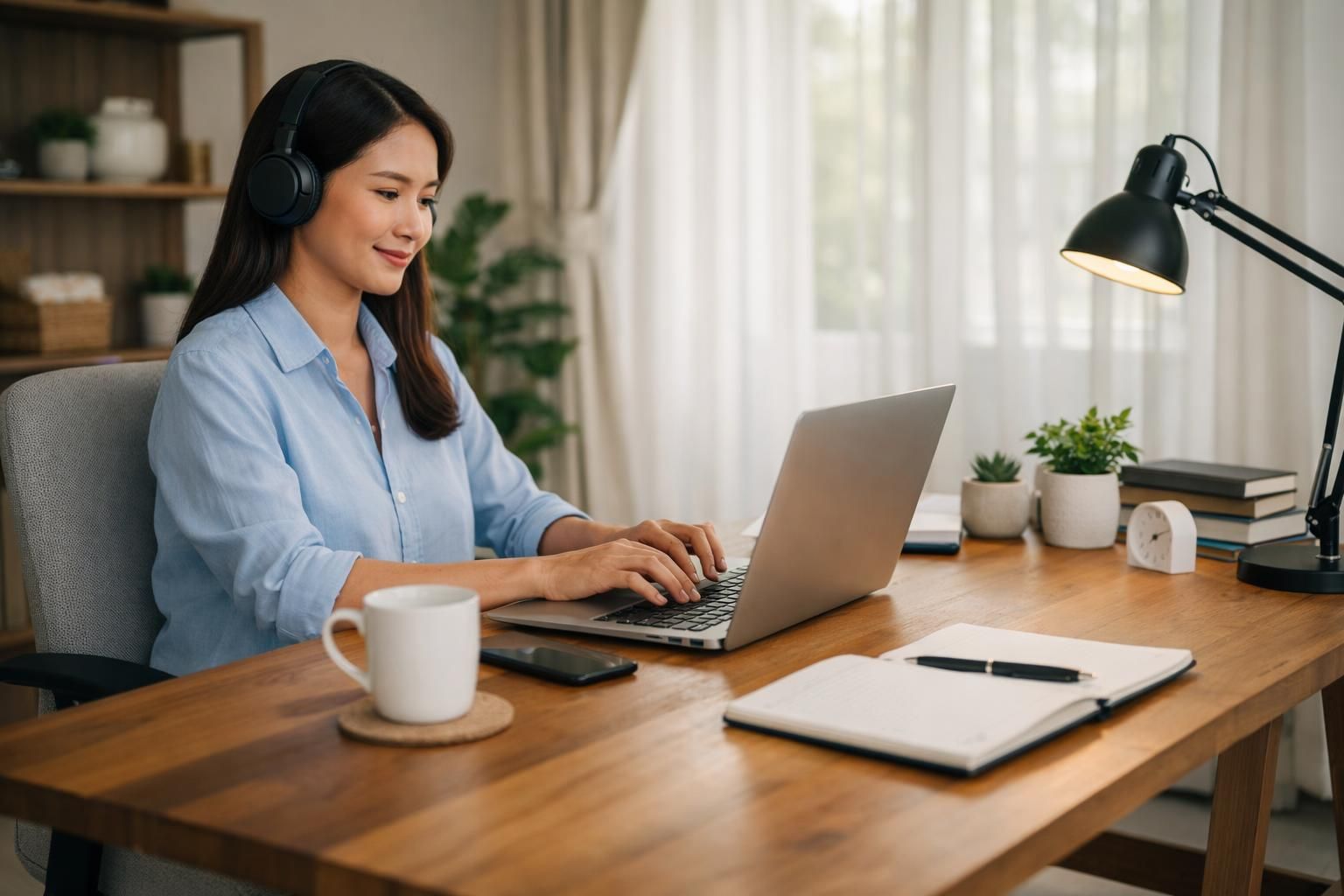
Whether you work from home every day or split your week between home and an office, a simple setup can make the working day feel more organised. It does not need to look like a corporate office: a clear table, a few adjustments and a defined finish time can be useful starting points.
The NHS notes that home and hybrid working can affect mental wellbeing. Keeping a steady routine, taking breaks and separating work from personal time may help with focus and stress management. NHS: Simple tips to tackle working from home provides further guidance.
A quick workspace checklist
- Choose one work surface where possible. A desk or table is generally a better option than working from a sofa. Before starting, gather your laptop, charger, notebook and any other items you expect to need.
- Reduce distractions. Pick a quieter area when you can. In a small shared home, this may simply mean agreeing which end of the dining table is your work space during set hours.
- Set up your chair thoughtfully. When typing, aim for forearms level with the table and elbows at roughly 90 degrees. If your chair is not adjustable, a cushion behind your lower back may make it more comfortable. A stable box can serve as a footrest if needed.
- Make a simple work-time signal. Headphones or a note at the table can help family members or housemates know when you are concentrating.
Build breaks into the day
A change of focus can be valuable. The NHS suggests short screen breaks of around five to 10 minutes each hour to support productivity. On a home-working morning, try placing a recurring calendar reminder rather than relying on memory. Use the pause to refill water, look away from the screen or take a brief walk indoors.
On a hybrid-office day, the same approach can work between online meetings. Taking lunch and stepping away from your work surface can also create a clearer pause, rather than eating while continuing to answer messages.
Start and finish with boundaries
Where possible, follow your usual sleep and work patterns. Before opening email, arrange the items you need and decide when you expect to stop. At the end of the day, switch off from work and pack away your laptop or papers if your table is also used for meals or family time. This can help mark the difference between work and home life.
Keep it adaptable
These are practical ideas, not a personalised ergonomic assessment. Try one or two changes that suit your space, routine and household, then adjust as needed. For more general health information, visit ISAW Medical.
This article is for general education and does not replace personalised advice from a qualified healthcare professional.