

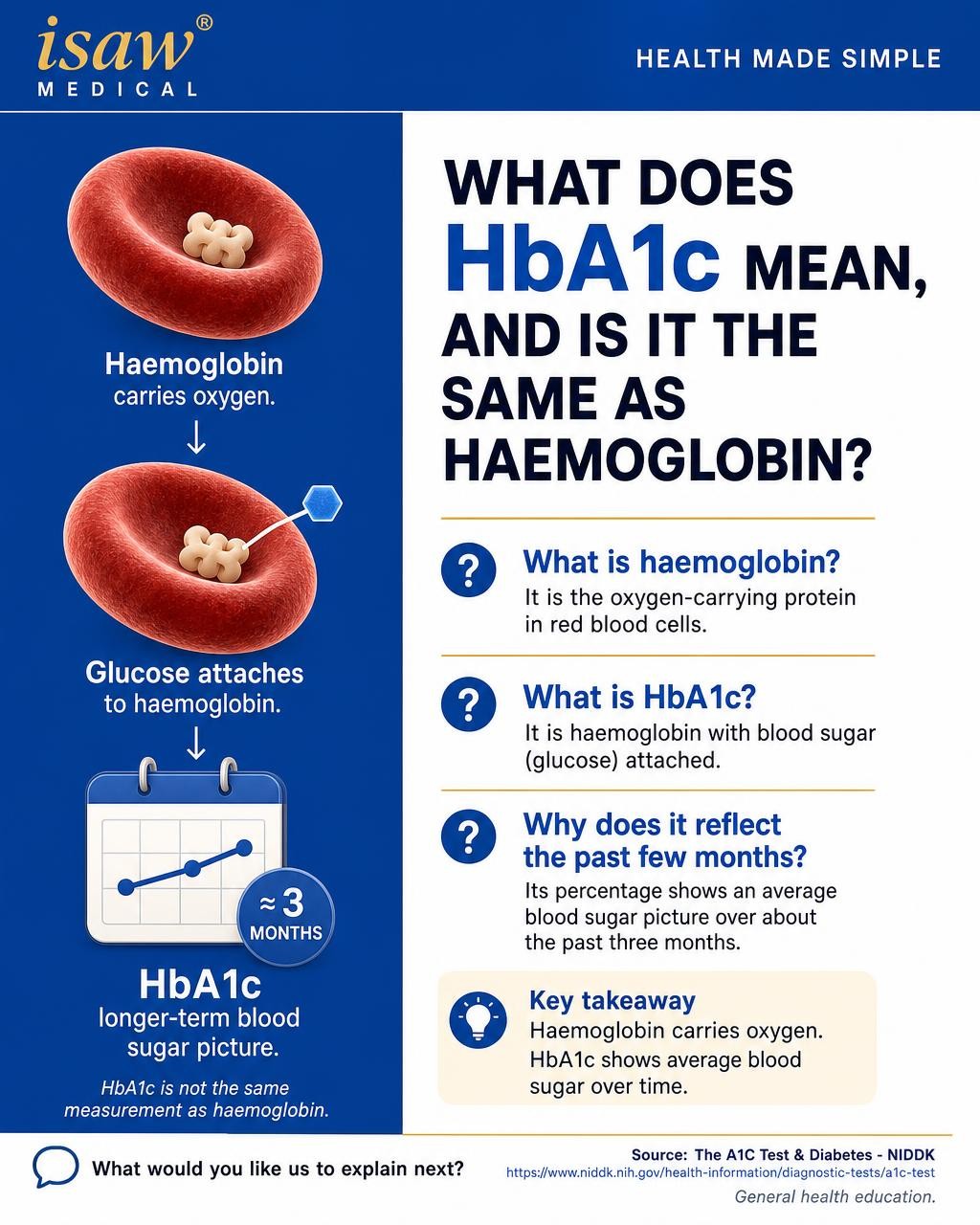
What does HbA1c mean, and is it the same as haemoglobin? Not quite. Haemoglobin carries oxygen in red blood cells, while HbA1c is haemoglobin with blood sugar attached to it.
What is haemoglobin?
Haemoglobin is the oxygen-carrying protein inside red blood cells. Its main job is to help carry oxygen around the body.
What is HbA1c?
HbA1c means haemoglobin that has blood sugar, also called glucose, attached to it. Blood sugar can attach to haemoglobin as red blood cells travel through the bloodstream. When there is more blood sugar in the bloodstream, more can become attached.
An HbA1c result is reported as a percentage. It is not the same measurement as a haemoglobin test, even though both names begin with “Hb”.
Why does it reflect the past few months?
Because HbA1c looks at blood sugar attached to haemoglobin in red blood cells, it gives a longer-term picture of average blood sugar over about the past three months. A blood glucose check, by comparison, shows the level at one point in time.
Think of HbA1c like a three-month summary rather than one photo taken today. It is based on what is attached to haemoglobin, not on a written daily record.
For more detail, see The A1C Test & Diabetes - NIDDK.
Takeaway: Hb and HbA1c share a name, but answer different questions: haemoglobin helps carry oxygen, while HbA1c reflects average blood sugar over time.
ISAW makes everyday health knowledge easier to understand. Visit ISAW Medical.
This article is for general education and does not replace personalised advice from a qualified healthcare professional.