

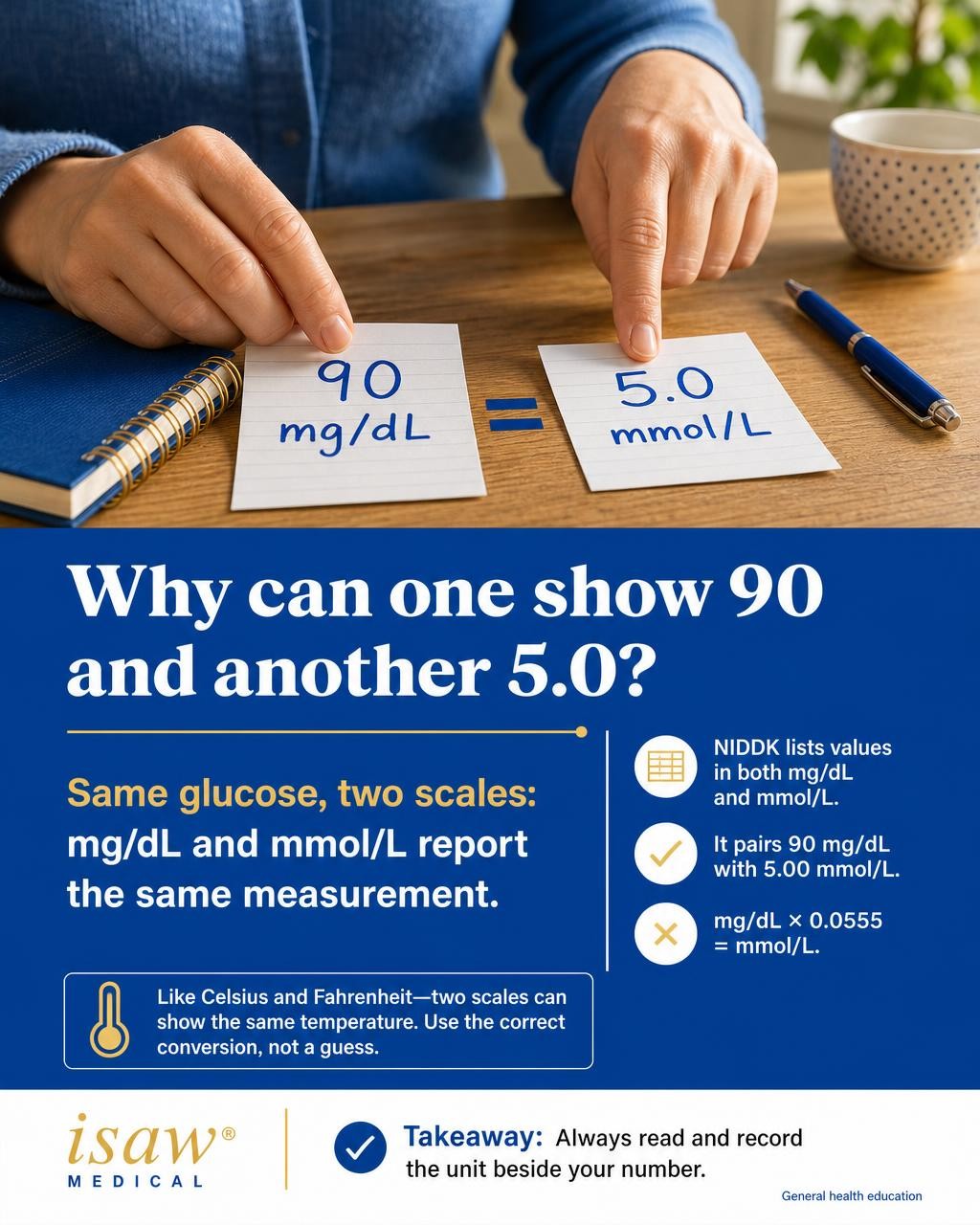
Two glucose screens can show different-looking numbers. A family notebook may say 5.0 mmol/L, while another result says 90 mg/dL. They can mean the same blood sugar measurement.
Same blood sugar, two number styles
mg/dL and mmol/L are two scales used to report blood glucose. The number only makes sense when you read the unit beside it.
The NIDDK Diabetes in America conversion table lists glucose results side by side in both units. It shows that 90 mg/dL equals 5.00 mmol/L.
Why do the numbers look so different?
The scales use different-sized units. This is a little like Celsius and Fahrenheit: the numbers can look different while describing the same temperature. For blood sugar, use the correct glucose conversion rather than guessing.
The NIDDK table gives this conversion: mg/dL multiplied by 0.0555 equals mmol/L.
What to remember
When comparing a home record, clinic result or family note, always read and record the unit beside the number. A change from 90 to 5.0 may be a unit change, not a sudden change in blood sugar.
ISAW makes everyday health knowledge easier to understand. Learn more at ISAW Medical.
This article is for general education and does not replace personalised advice from a qualified healthcare professional.