

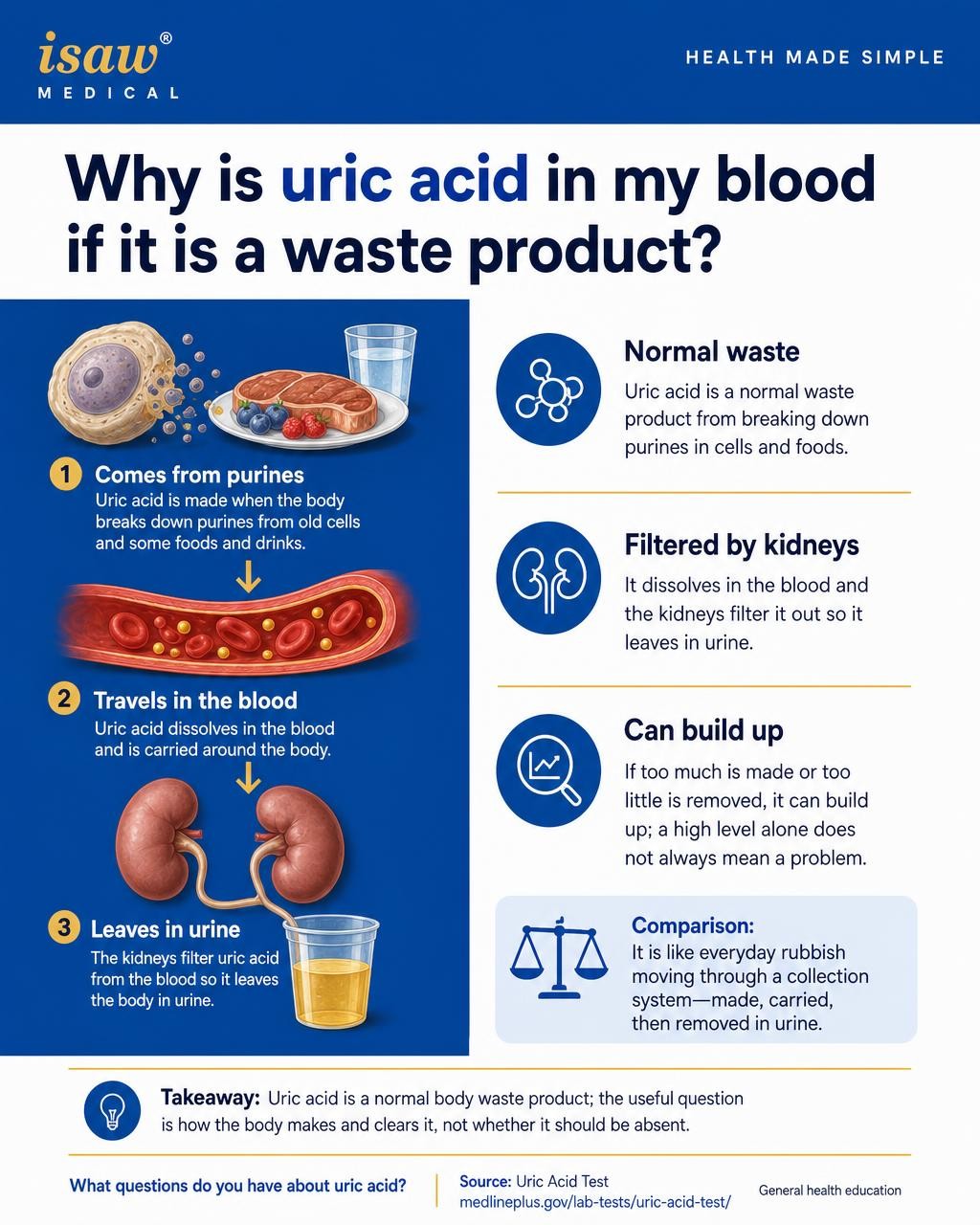
Why is uric acid in my blood if it is a waste product? Uric acid is meant to be there for a short time. Your blood carries it to the kidneys, which usually remove it in urine.
Where uric acid comes from
Your body makes uric acid when it breaks down purines. Purines are substances released as old cells die, and they are also found in certain foods and drinks.
Think of it like everyday rubbish moving through a collection system. It is made during normal activity, carried in the blood, then removed. This is only a simple comparison: the body uses many detailed chemical processes.
How it normally leaves the body
Uric acid usually dissolves in the blood. The kidneys filter it out, and it leaves the body in urine. So, seeing uric acid in a blood test does not mean it should be completely absent; the result shows how much is present at that time.
For more detail, see MedlinePlus’ Uric Acid Test.
What if it builds up?
Uric acid can build up if the body makes too much or if too little is removed. However, one high reading alone does not always mean a person has a health problem. Not everyone with a high level develops related problems, and a high result by itself does not confirm gout.
The useful takeaway: uric acid is a normal body waste product. The important idea is how the body makes and clears it, rather than expecting it to be missing from the blood.
ISAW helps make everyday health knowledge easier to understand. Learn more at ISAW Medical.
This article is for general education and does not replace personalised advice from a qualified healthcare professional.