

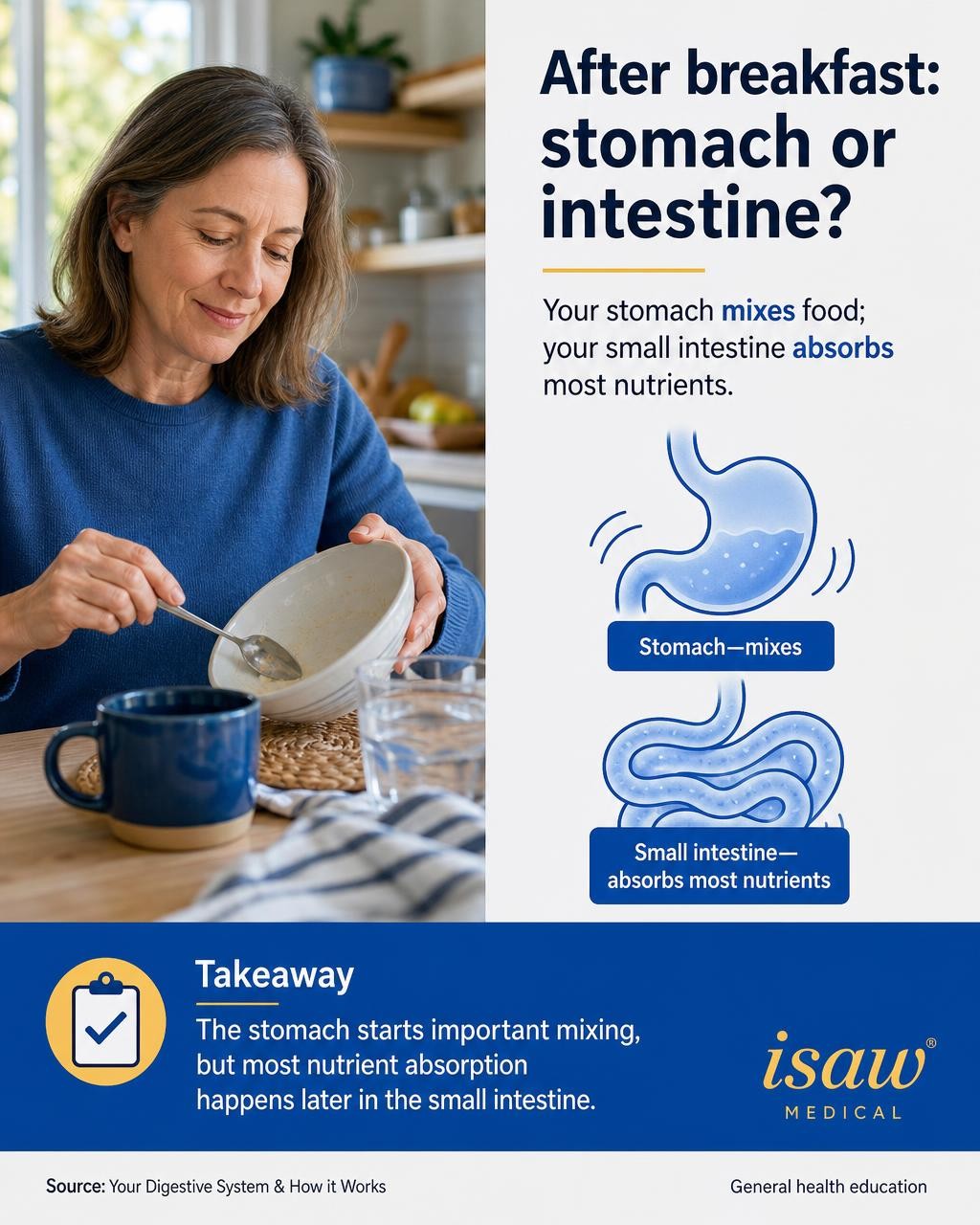
Breakfast does not stop working when it reaches your stomach. Your stomach mixes food; your small intestine absorbs most nutrients.
Stomach: the first mixing stage
After you eat or drink, muscles in your stomach mix the contents with digestive juices. The stomach then slowly passes this mixture into the small intestine.
Think of it like two parts of a kitchen process: the stomach does much of the mixing first. This is only a simple comparison, because several organs and body signals work together during digestion.
Small intestine: where most nutrients are taken in
In the small intestine, the food mixture is mixed further with digestive juices from the pancreas, liver and intestine. Most nutrients are then absorbed into the bloodstream.
This is why the small intestine matters so much after a meal. It is not simply a place food passes through after the stomach; it is where your body takes in most of the useful parts from food.
What happens after that?
What remains moves on to the large intestine, which mainly absorbs more water. The stomach and small intestine therefore have different jobs, carried out in order rather than as interchangeable storage spaces.
For more on this process, see Your Digestive System & How it Works.
ISAW makes everyday health knowledge easier to understand. Visit ISAW Medical.
This article is for general education and does not replace personalised advice from a qualified healthcare professional.