

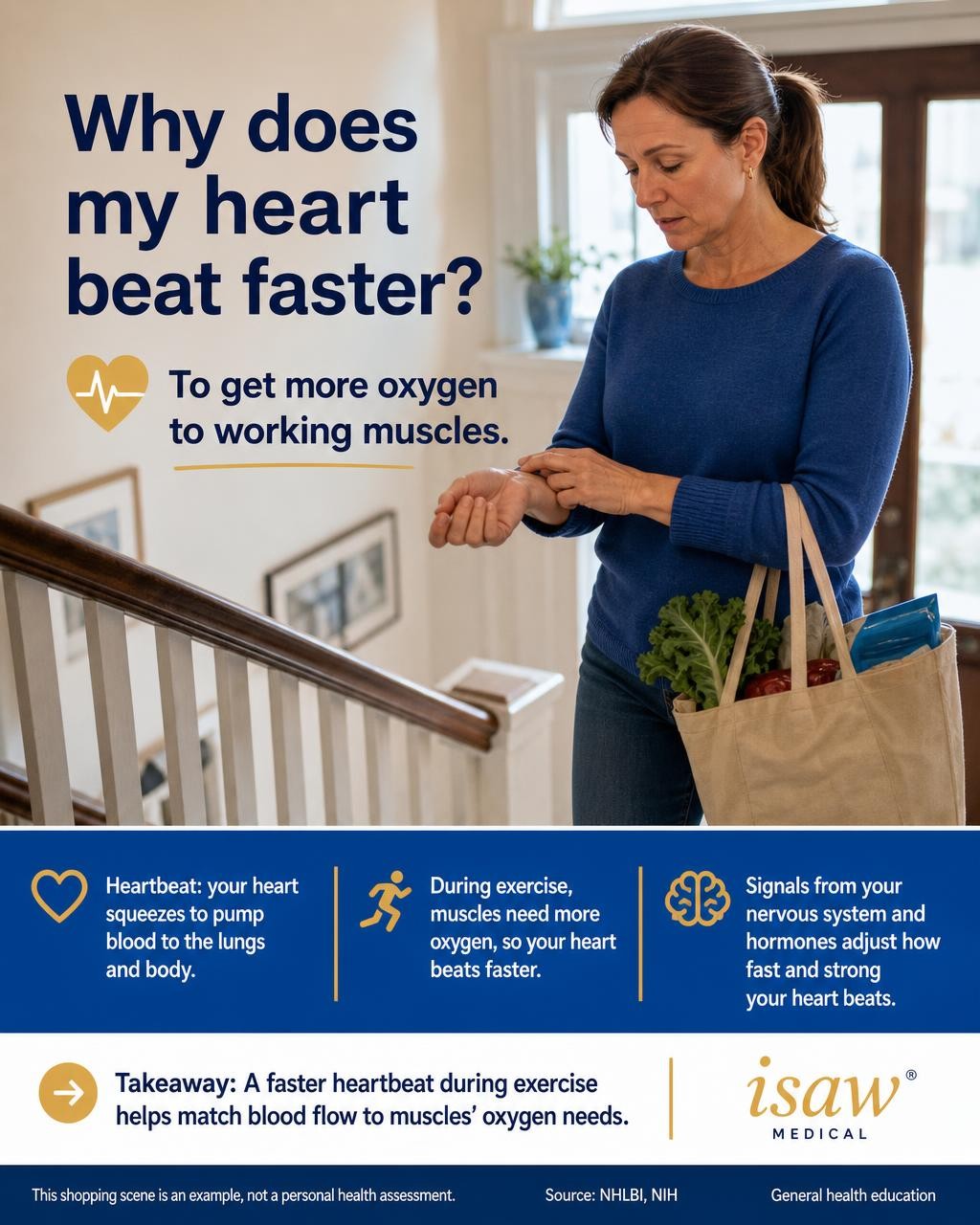
Upstairs, your pulse suddenly feels quicker as you put down the shopping bags. Your heart beats faster during exercise to get more oxygen to muscles.
One everyday example
Walking upstairs while carrying shopping makes your muscles work harder than when you are sitting or standing still. This scene is an example of a normal body response, not a personal health assessment.
Your heart delivers blood
Each heartbeat is your heart squeezing. It pumps blood to your lungs and to the rest of your body. When you are active, your working muscles need more oxygen.
The delivery pace increases
Your heart can respond by beating faster, helping send more oxygen-rich blood to those muscles. It is a little like increasing the delivery pace when more supplies are needed. The body is more complex than this comparison, because several signals help control the response.
Signals adjust each beat
Signals from your nervous system and hormones help adjust how fast and how strongly your heart beats. This helps match blood flow to your muscles’ increased oxygen needs during exercise.
Learn more from the NHLBI, NIH: How the Heart Works – How the Heart Beats.
ISAW makes everyday health knowledge easier to understand. Visit ISAW Medical.
Takeaway: A faster heartbeat during exercise helps match blood flow to muscles’ increased oxygen needs.
This article is for general education and does not replace personalised advice from a qualified healthcare professional.