
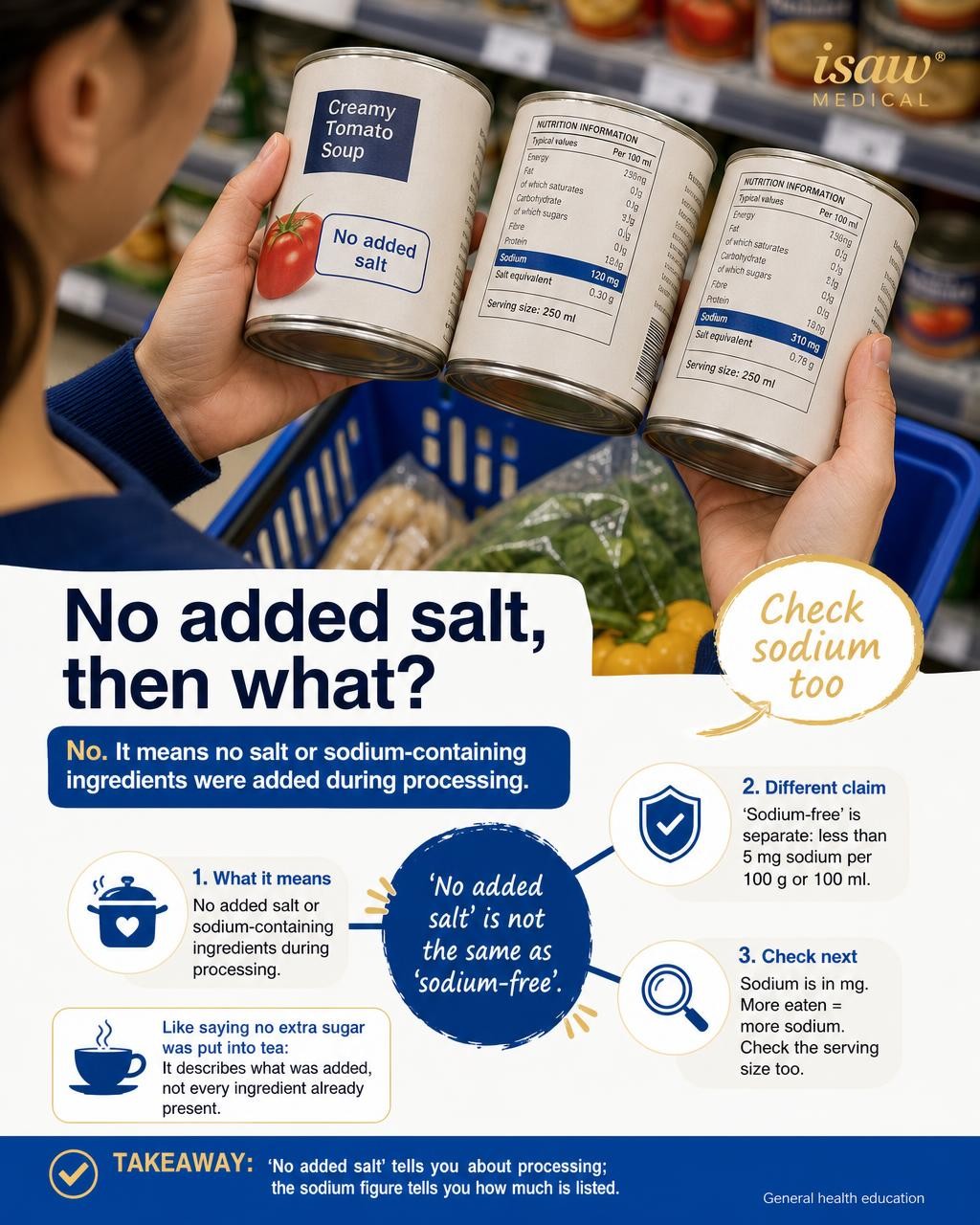
A soup tin says ‘no added salt’ — what does it mean? No, it does not mean the food contains no sodium. It means no salt or sodium-containing ingredients were added during processing.
No added salt, then what?
Think of this as a small label mindmap. The central idea is simple: ‘no added salt’ is not the same as ‘sodium-free’.
1. What the claim means
Malaysian guidance says ‘no added sodium/salt’ means no salt or other sodium-containing ingredient was added while the food was made. It describes the processing, not the total sodium listed in the food.
2. Sodium-free is a separate claim
‘Sodium-free’ has its own meaning: the food contains less than 5 mg of sodium per 100 g or 100 ml. A product labelled ‘no added salt’ does not automatically meet this separate claim.
3. Check sodium too
Look at the sodium line on the nutrition label. Sodium is shown in milligrams. Also check the serving size: if you eat more servings, the amount of sodium you eat rises too.
It is a little like saying no extra sugar was put into tea. That tells you what was added, not every ingredient already present. The same idea helps when comparing similar soup tins.
Read the Malaysian Ministry of Health guide, Garam (Sodium) Cara Membaca Pada Pelabelan Pemakanan, for the label definitions.
ISAW makes everyday health knowledge easier to understand. Visit ISAW Medical.
Takeaway: ‘No added salt’ tells you about processing; the sodium figure tells you how much is listed.
This article is for general education and does not replace personalised advice from a qualified healthcare professional.