

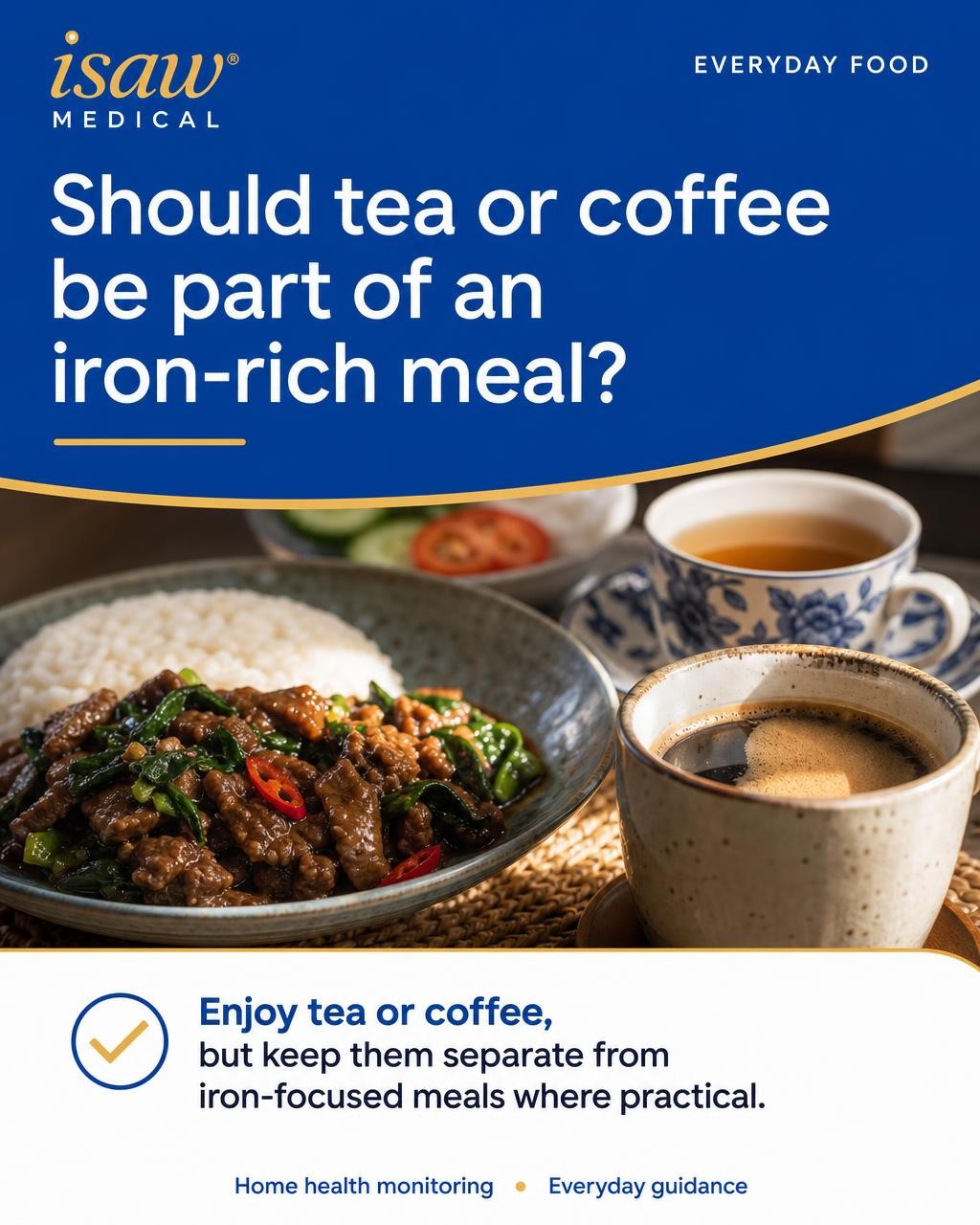
Enjoy tea or coffee — just consider what is on the plate too.
Does your usual teh tarik, kopi or cuppa arrive with breakfast or lunch? If that meal is centred on iron-rich foods, a small timing change can be a practical part of everyday food planning. This matters when discussing anaemia, but it is not a way to diagnose its cause.
Why meal timing can matter for iron
According to the World Health Organization: Anaemia, anaemia means having fewer red blood cells or a lower haemoglobin concentration than normal. It can have many causes, including nutrient deficiencies, inadequate dietary intake or absorption, infections, chronic diseases, heavy menstrual loss, pregnancy-related factors and inherited red blood cell disorders such as thalassaemia.
Iron deficiency is a common nutritional cause, but it is not the only one. WHO advises a varied diet with iron-rich foods such as lean red meat, fish, poultry, legumes, fortified cereals and dark green leafy vegetables. Vitamin C-rich fruits and vegetables can help the body absorb iron. WHO also advises avoiding tea, coffee, cocoa, calcium and bran in cereals when eating iron-rich foods because they can slow iron absorption.
Saveable everyday checklist
- At an iron-focused meal: include iron-rich foods where appropriate, such as beans, dhal, leafy vegetables, fish, poultry or fortified cereal.
- Add colour to the plate: choose vitamin C-rich fruit or vegetables alongside the meal.
- Move the drink, not necessarily the habit: have tea, coffee or cocoa separately rather than with the iron-focused meal.
- Check breakfast pairings: if fortified cereal is the iron-focused choice, consider whether tea, coffee, cocoa, milk or a bran cereal is being taken with it.
- Keep household advice simple: food choices may support iron intake and absorption, but they cannot identify why haemoglobin is low.
Ordinary meal examples
These are practical editorial examples, not treatment plans. With lunch containing dhal, beans or leafy vegetables, add fruit or vegetables to the meal and enjoy tea or coffee separately. At breakfast, notice whether your fortified cereal and morning drink are being taken together; if so, consider separating them.
A low haemoglobin result needs context
A haemoglobin reading can show that haemoglobin is lower than expected, but it cannot by itself tell you whether the reason is iron deficiency, thalassaemia or another cause of anaemia. Avoid guessing from a home result or changing your diet as though one cause has been confirmed. Discuss a low result with a qualified healthcare professional for proper assessment.
ISAW Medical combines home health monitoring products with practical guidance and support, helping make everyday health information easier to use thoughtfully.
This article is for general education and does not replace personalised advice from a qualified healthcare professional.